 Error Solis
Choose the memory
Start with a body plan, shell, beak, limb, motion, hunting method or social behaviour—not necessarily a whole animal.
Error Solis ships are memorial machines. An animal's shell, bill, fins, posture, movement or behaviour can become structure—but the result must still read as a working spacecraft at phone scale.
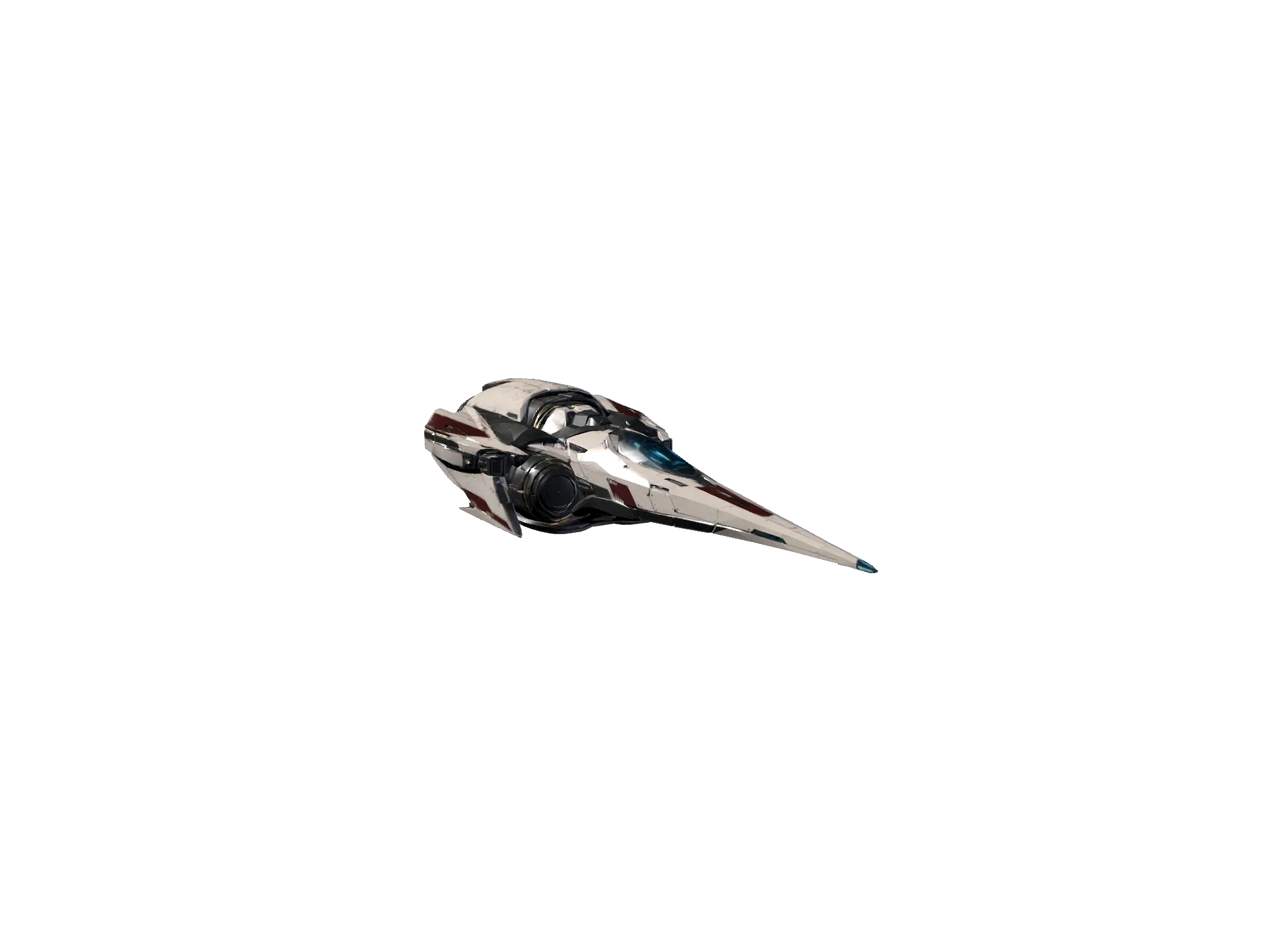
A memorial hull should preserve a memory without becoming a mascot, statue or animal head attached to an engine.
Start with a body plan, shell, beak, limb, motion, hunting method or social behaviour—not necessarily a whole animal.
Translate the reference into armor, sensor geometry, cargo volume, propulsion, weapons or the ship's posture in flight.
The career and direction of travel must remain legible from a chase camera on a phone.
Some early Error Solis hulls use bird-derived profiles, and they remain valid members of the catalog. The design language is broader: insects, crustaceans, fish, mammals and extinct animals can all contribute a functional idea.
A glyptodon's shell can become a protected cargo body. A mantis shrimp's striking posture can influence a raider's weapons envelope. A whale's mass and migration can suggest a Freighter. What matters is the design translation, not the taxonomic group.
The game has four permanent careers, each with a ship class. A Fighter should communicate agility and close combat. Artillery needs a readable long-range weapons body. A Corsair can look patched, asymmetric and opportunistic. A Freighter must own visible volume and defensive weight.
Ash, pale bone, burnt iron and ember belong to the hull. Cyan is reserved for shields, reactors and active energy cues. The contrast helps a small spacecraft remain readable against space while reinforcing a civilisation built after the Sun was broken.
The public flight deck contains 30 current in-engine hull renders across the Fighter, Corsair, Artillery and Freighter classes. Three compatibility imports remain deliberately excluded while their separated geometry is repaired.
The current catalog ranges from compact strike craft to monumental haulers.
A long pursuit nose and one large central drive support an intermediate close-combat silhouette.
The mantis shrimp's striking posture becomes an advanced raider weapons envelope.
A broad protected hold carries the logic of an armored shell without copying the animal literally.
A segmented armored body and forward batteries translate patient mass into ranged pressure.
Silhouette, thrusters and weapons only matter once the craft moves through the live cockpit.
Join a future Android or iOS test and help judge whether these silhouettes stay readable in combat.